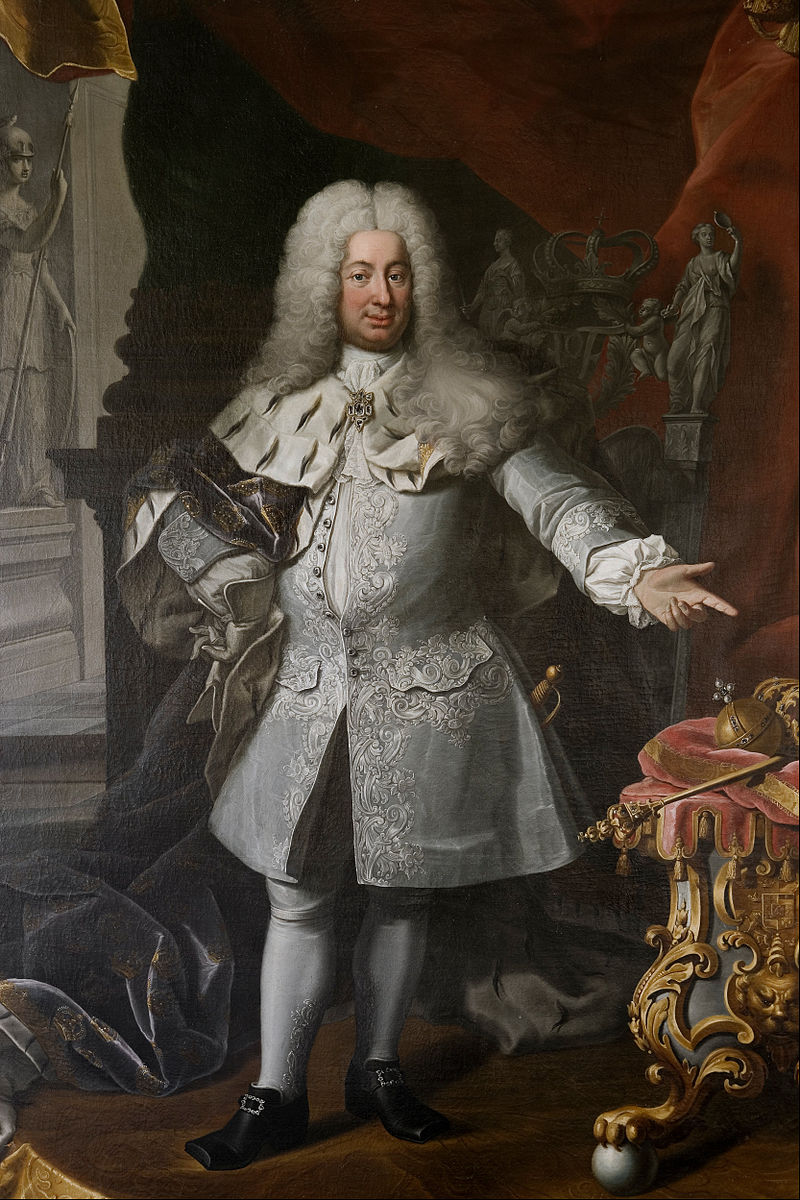
Frederick I
Reign
Sweden (1720 – 1751)
Description
Frederick I ruled Sweden from 1720 until his death in 1751. Under his rule, the country gradually stabilized after the previous great power struggles. Frigyes was not of Swedish origin, but the provincial count of Hessen-Kassel. He ascended the Swedish throne through his marriage to his second wife, Queen Ulrika Eleonora. The queen abdicated in 1720 in favor of her husband.I. During Frederick's reign, Sweden underwent significant changes. The king was extremely popular due to his cheerful, friendly and generous nature. He took an active role in the management of state affairs and introduced many reforms. After the great power struggles led by the previous rulers, Sweden had time for internal stabilization. During the reign of Frigyes, the country gradually recovered. The king introduced a number of reforms aimed at modernizing the country and improving the economic situation. Frigyes was extremely popular among the people due to his kind and direct personality. From 1730 until his death, he was not only the Swedish king, but He was also the Provincial Count of Hessen-Kassel, thus fulfilling a dual role.I. Frederick's reign was a significant turning point in the history of Sweden. He arrived as a king of foreign origin, but with his popularity and decisive leadership he managed to stabilize the country and implement many important reforms.
Minting information
The reign of Frederick I (1720-1751) fell during a turbulent period in Sweden's history, a time of economic recession and political instability after the Great Northern War. His coins reflect this era, and their variety shows the king's efforts towards economic reforms, the development of the coinage techniques of the time, and the current trends in Swedish art. Types of coins minted during his reign: copper: 1 daler, 1/2 daler, 1/4 daler, 1/8 riksdaler, silver: 1 riksdaler, 1/2 riksdaler, 1/4 riksdaler, 1/8 riksdaler, gold: 2 ducats, 1 ducat.I. Frederick's portrait dominates the obverse side of the coins. The early coins depict the king in profile, while the later ones are en face, with a crown on his head. The inscriptions are found in both Latin and Swedish, and usually contain the king's name, title and regnal year. (Stockholm, Gothenburg, Köping) are reflected. The value of the coins is shown at face value. I. During the reign of Frederick, the decimal monetary system was introduced in Sweden, which is also reflected in the denominations of the coins. The development of the coinage techniques of the time led to an improvement in the quality of the coins. The decoration of the coins reflects the stylistic features of Swedish baroque art. I. The coins of King Frederick of Sweden are still sought after by collectors. Their value may vary depending on the type, rarity and condition of the coins.