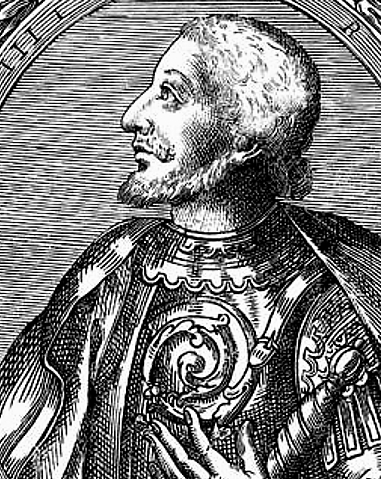
Charles II
Reign
Hungary (1385 – 1386)
Description
II. Károly came from the Durazzo branch of the Anjou house. His father, Louis of Anjou, was the duke of Durazzo, and he himself became known as a talented general in the court of King Louis the Great of Hungary. He had three children from his marriage to Margaret of Durazzo's daughter, Margit: Mária, Johanna, and László of Naples. On September 17, 1382, in Székesfehérvár, Archbishop Demeter of Esztergom crowned Mária as the "king" of Hungary. At first, there was no sign that Károly the Little wanted to interfere in Hungarian affairs, he was still busy securing his power in Naples. When the Pope and the During his campaign launched with the support of the Hungarian king, he successfully took over, and the issue of the Kingdom of Hungary also came up. In Hungary, at the initiative and with the help of his party, he was crowned as the legal king at the end of 1385. However, at the beginning of his reign, on February 7, 1386, he was mortally wounded during a court conspiracy, and died on February 24. Thus, he became the shortest reigning monarch in Hungarian history. With his assassination, the Kingdom of Hungary sank into a state of division and civil war that lasted for more than a decade and a half. Only five months had to pass before the main plotters and the executioner of the murder met the same fate.
Minting information
II. Károly (the Little) (1385-1386) reigned as king of Hungary for a short time, and this short period did not have a significant impact on coinage. His coinage continued on the basis of the previous designs and coins. In the 14th century in Hungary, silver coins and some gold coins were mainly used during the coinage. The silver coins were minted in the currency called "denár", while the gold coins were known as "florin". During the reign of Charles II (the Little), the Hungarian coinage did not fundamentally change. happened.
No coins linked to this ruler yet.