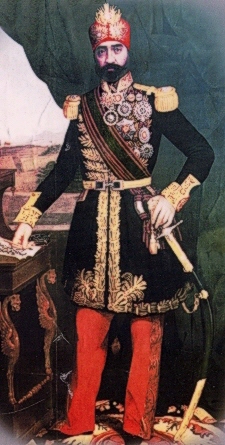
Muhammad III
Reign
Tunisia (1859 – 1882)
Description
III. Muhammad Bey, also known as Sadok Bey (February 7, 1813 – October 27, 1882), was a significant figure in the Husaynid dynasty of Tunisia. He was the Bey of Tunisia from 1859 until his death in 1882. Bey Muhammad was born in 1813 in Le Bardo, Tunisia. His father was Al-Husayn II ibn Mahmud, and his mother was Lalla Fatima al-Munastiri. He ascended the throne of his father in 1859, after Muhammad II ibn al-Husayn was the bey. During his reign, he introduced significant reforms, for example, in 1861, he created the first written constitution of the Arab world in Tunisia, which limited his power and separated state powers. Muhammad Bey supported Western investments and modernization in Tunisia. He opened the country to Western technologies and trade, which contributed to the country's economic development. He died in Le Bardo in 1882 and was buried in the Tourbet el Bey mausoleum.
Minting information
III. Muhammad Bey's reign (1859-1882) marked an important period in Tunisian history, marked by reforms and modernization. This era was also felt in coinage, where new types of coins were introduced and minting techniques were modernized. The types of coins he minted: Gold: 20 francs, 10 francs, 5 francs Silver: 5 piastres, 2 piastres, 1 piastre, 1/2 piastre, 1/4 piastre Copper: 10 nous, 5 nous, 2 nous, 1 nous hand minting was gradually replaced by machine minting, which improved the quality and accuracy of the coins. The introduction of steam engines in the mints made the production process more efficient and productive. The use of modern presses made it possible to mint finer finished coins. Coin characteristics: obverse III. Bey Muhammad's portrait, his title, the value of the coin, the year of minting, and the coat of arms of Tunis can be seen on the back. The inscription was in Arabic and French. Important coins were: 20 francs of 1860: This was the first Tunisian gold coin struck by machine. 5 of 1874 piastre: Silver coin on which III. Muhammad Bey's portrait and the Tunisian coat of arms are visible. 1 nous of 1881: Copper coin, on which the Tunisian coat of arms and the value of the medal are shown. III. During the reign of Muhammad Bey, Tunisian coinage underwent significant development.
