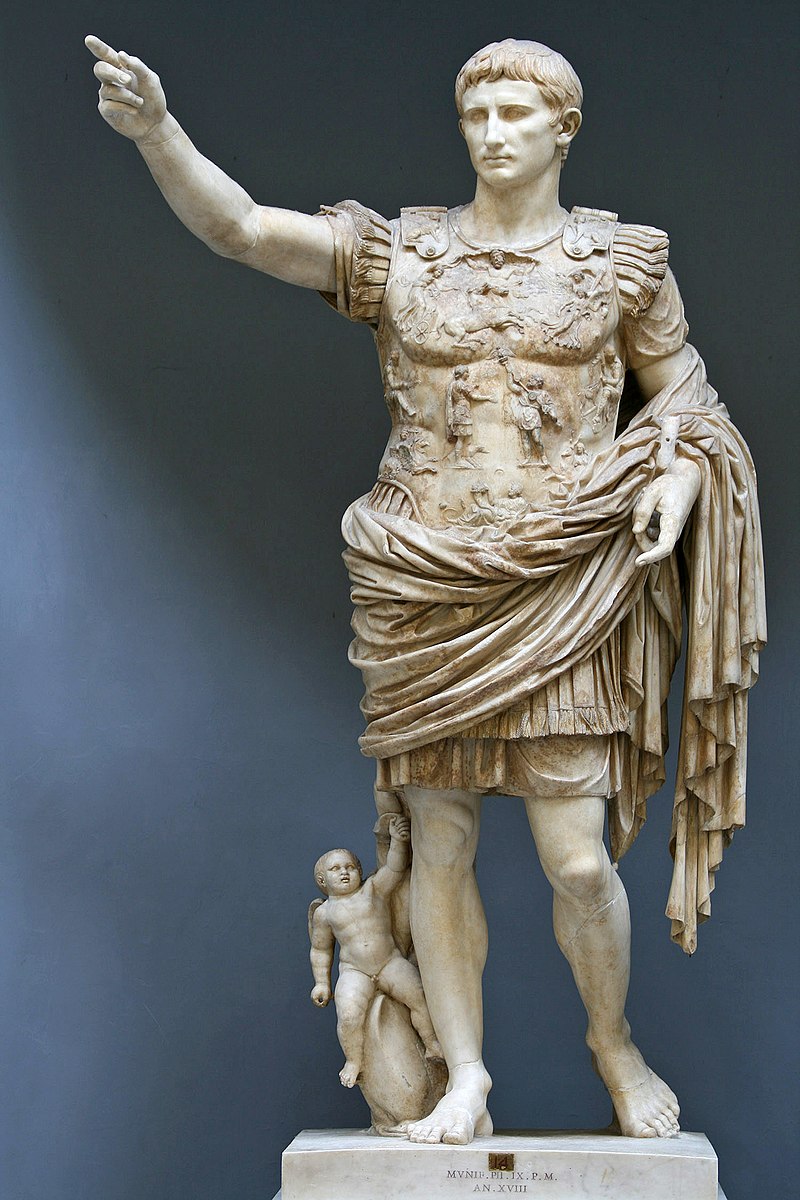
Augustus
Reign
Roman Empire (27 – 14)
Description
The first emperor of the Iulius-Claudius dynasty.
His reign is considered to be from before Christ, so his reign lasted 41 years.
CAESAR DIVI PHILIVS AVGVSTVS
Minting information
During the reign of Emperor Augustus (63 BC-AD 14), the coinage of the Roman Empire showed significant changes. Minting was centralized in Rome, and only the emperor had the right to mint money. The quality and weight of the money were standardized. New currencies were put into circulation, such as the aureus (gold coin), the denarius (silver coin) and the sestertius (copper coin). The centralization of the coinage resulted in the quality and weight of the coins becoming uniform. Before Augustus, money of different quality and weight was minted in different cities and provinces, which disrupted trade and the financial system. Augustus also contributed to the stabilization of the financial system by introducing new currencies. The aureus was found in B.C. He introduced it in 27 and it became the main currency of the Roman Empire. The denarius from B.C. It had been in circulation since the 2nd century, but became popular again under Augustus. The sestertius was used in BC. He introduced it in 23 AD, and it became the most common currency of the Roman Empire. Here are some specific examples of the coinage of Emperor Augustus: Gold coin: At the time of Augustus, the aureus weighed 7.28 grams, and the image on it depicted the emperor as a god. Silver coin: The denarius At the time of Augustus, it weighed 4.5 grams, and the image on it showed the emperor wearing civilian clothes.Copper money: The sestertius weighed 25.8 grams at the time of Augustus, and the image on it showed the emperor wearing military clothes. Augustus' coinage had a significant impact on on the economy and culture of the Roman Empire. A stable monetary system contributed to the economic development of the empire, and the new currencies became symbols of imperial power and Roman civilization.
