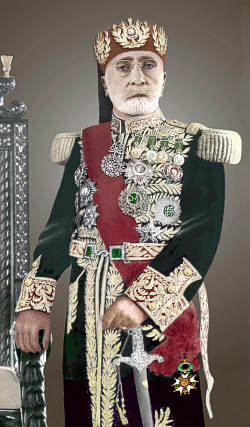
Muhammad VIII al-Amin
Description
Muhammad VIII al-Amín Bey, better known as Lamine Bey, was the last Bey and only king of Tunisia. He was considered a bey from 1943 to 1956, then a king from 1956 to 1957. 1881. He was born on September 4 in Carthage. He died in Tunis on September 30, 1962. He ruled as a bey from 1943 to 1956 and then as a king from 1956 to 1957. He was a member of the Husaynida dynasty. In 1943, the French invaders removed his predecessor, Muhammad VII, and Lamine Bey was appointed Bey. In 1956, after the independence of Tunisia, he was installed as king. In 1957, the Tunisian Constituent Assembly abdicated him and Habib Bourguiba became the country's first president. After losing his throne, Lamine Bey and his family went into exile and lived in a small apartment in Tunis .
Minting information
VIII. Coins minted in Tunisia during the reign of Muhammad al-Amin (1943-1957) can be divided into three main types: Coins, paper money, commemorative medals. VIII. Coins minted during the reign of Muhammad al-Amin were made in the following denominations: 1 farthing, 2 farthings, 3 farthings, 1 penny, 2 pence, 3 pence, 6 pence, 1 shilling, 2 shillings, 1 florin. The coins were made of copper, silver and gold. were made. VIII. on the obverse of the coins. The portrait of Muhammad al-Amin and the Tunisian coat of arms were visible on the back.VIII. Paper money printed during the reign of Muhammad al-Amin was made in the following denominations: 5 francs, 10 francs, 20 francs, 50 francs, 100 francs. The banknotes were issued by the Banque Centrale de Tunisie. VIII on the front of the banknotes. A portrait of Muhammad al-Amin, and Tunisian landscapes or historical landmarks were visible on the back.VIII. Commemorative coins minted during the reign of Muhammad al-Amin commemorated the following events: The ruler's accession to the throne, the country's independence, the completion of the first five-year plan. The commemorative coins were made of silver and gold. VIII. on the obverse of the commemorative coins. There was a portrait of Muhammad al-Amin, and on the back was a picture depicting the given event.

Tunisia Muhammad VIII al-Amin (1956-1957) 5 Francs
Available: 2 pcs (1 seller)
1 500 Ft – 1 800 Ft

Tunisia Muhammad VIII (1943-1957) 5 Francs Coin
Available: 1 pcs (1 seller)
2 900 Ft
Tunisia Muhammad VIII (1943-1957) 20 Francs Coin
Available: 1 pcs (1 seller)
1 200 Ft
Tunisia Muhammad VIII al-Amin (1956-1957) 50 Centimes