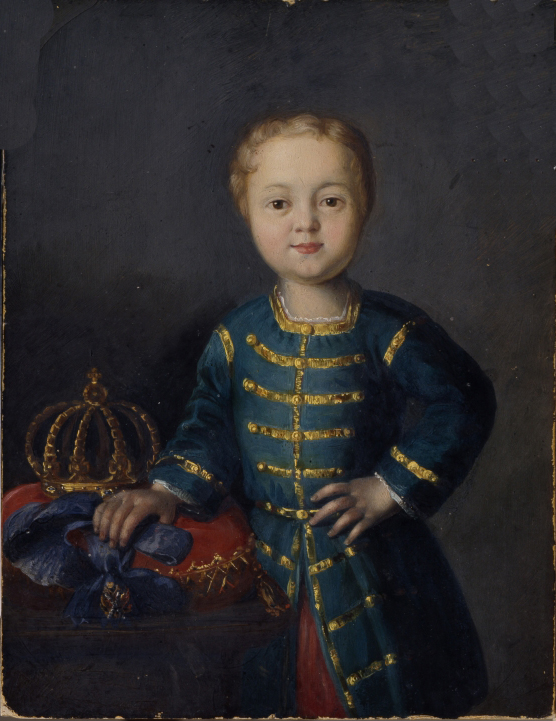
Ivan VI
Reign
Russia (1740 – 1741)
Description
Ivan VI was two months old when he became the head of Russia. His regent was Biron, who was appointed by his predecessor, Tsarina Anna, but Biron was exiled. Thus, his mother, Anna Leopoldovna, was active alongside the young tsar. Peter I's daughter Elizabeth was still bothered by the fact that she was not on the throne. She accepted the regency, which ended Iván VI's one-year reign. Until 1744, Ivan and his family were in captivity, where his mother lost her life. Ivan was sent to solitary confinement. Elizabeth ordered that the boy must be killed in any case of an escape attempt. In 1764, a Ukrainian military officer tried to get Ivan out, but the boy was killed immediately.
Minting information
VI. Tsar Ivan became the head of Russia in 1740, when he was only 2 months old. His reign was short and eventful, and he also brought significant changes in the field of coinage. After the death of the former Tsarina, Anna, the order of succession appointed Ivan, the last heir from the Rurik dynasty, to the throne. However, Iván was too young to rule independently, so a regent had to be appointed alongside him. Anna's imperial chancellor, Prince Biron, became the regent, but the real power was concentrated in his hands. Biron also brought significant changes in the coinage. In addition to the traditional silver and gold coins of that time, he also minted copper coins to make money more accessible to the population. The copper coins were called "polushka" and were worth 1/2 denga. Biron's copper coins were very popular among the people, but the nobility did not take kindly to the changes. The nobility believed that the copper coins worsened the country's economic situation. In November 1740, Biron's power faltered and he was stripped of the title of regent during a coup d'état. Empress Anna's niece, Elizabeth I, came to the throne. During Elizabeth's reign, the minting of copper coins continued, but the minting of silver and gold coins also increased. The weight and purity of the copper coins were also modified to meet international standards.