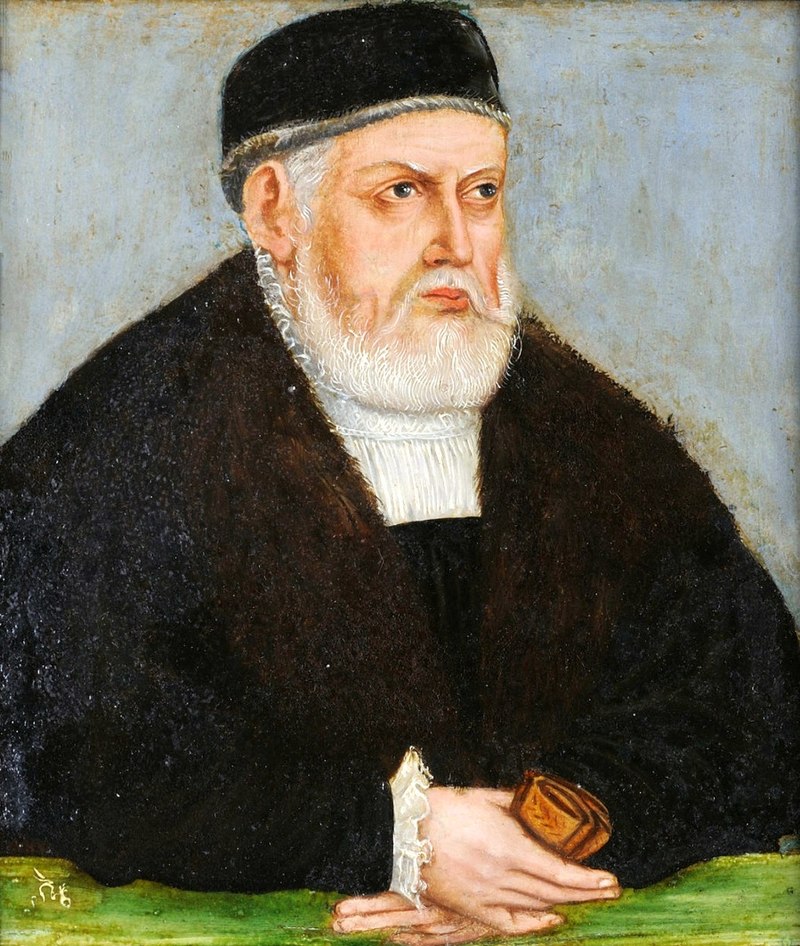
Sigismund I the Old
Description
Sigismund I (Polish: Zygmunt I, Lithuanian: Žygimantas II) was born on January 1, 1467 in Kozienice, Poland and died on April 1, 1548 in Kraków. He was the king of Poland and the grand duke of Lithuania from 1506 until his death. Sigismund was a member of the Jagiellonian house, and due to his longevity and his reign of more than forty-one years, he was nicknamed "Old Sigismund" (Polish: Zygmunt Stary, Lithuanian: Žygimantas Senasis). , to distinguish him from his son and heir, the later II. From Zsigmond. Zsigmond IV was born in 1467. As the child of King Kazmér of Poland and Queen Elisabeth of Austria. He was the fifth male child among thirteen siblings, so it was not expected that he would ever occupy the throne of the country. Zsigmond's eldest brother and their father's heir II. Ulászló first became Czech, then Hungarian and Croatian king, succeeding György Podjebrád and Mátyás Hunyadi. When their father died in 1492, he divided his kingdom between his two older sons: János Albert I, King of Poland, while Sándor became Grand Duke of Lithuania. After the death of János Albert in 1501, Sándor also inherited the Polish crown, and after his unexpected death in 1506, the throne passed to the then thirty-nine-year-old Zsigmond. the Duchy of Prussia, founded by his nephew Albert of Brandenburg, should be a vassal of the Kingdom of Poland. Under the leadership of his general, Jan Tarnowski, he defeated Moldavia during the Battle of Obertini and also successfully fought against the Grand Duchy of Moscow, thereby strengthening the eastern borders of his country. His first children were born to his lover, Katarzyna Telniczanka (†1528), with whom he probably married in 1498. , but this was not a sure connection. János Albert (*Cracow, 8 January 1499; †Poznań, 18 February 1538), Bishop of Vilnius and Poznań, Regina (*1500; †20 May 1526), Katalin ( *1503; †after September 9, 1548).In 1512 he married Borbála Szapolyai, the sister of János Szapolyai, later the Hungarian king. Two daughters were born from the marriage: Hedvig (*Poznań, March 15, 1513; †Neuruppin, Brandenburg, February 7, 1573), Anna (*July 1, 1515; †May 8, 1520).His wife was already in 1515. died on October 2, and Zsigmond married for the third time in 1518, at the age of 50, on the recommendation of the Holy Roman Emperor Miksa I, he married Princess Sforza Bona of Milan. One son and four daughters were born from the marriage: Izabella (*Krakow, 18 January 1519; †Gyulafehérvár, 15 September 1559), from 1540 the wife of the Hungarian king János Szapolyai, Ágost Zsigmond (*Krakow, 1 August 1520) .; †Knyszyn, 7 July 1572), King of Poland and Grand Duke of Lithuania, Sophia (*Krakow, 13 July 1522; †Schöningen, 28 May 1575), from 1556 II. Anna, wife of Duke Henrik of Braunschweig-Wolfenbüttel (*Krakow, 18 October 1523; †Warsaw, 9 September 1596), from 1576 Katalin (*Krakow, 1 November 1526; †Stockholm) wife of Prince István Báthory of Transylvania , 16 September 1583), from 1562 III. Wife of the Swedish King John III. The mother of King Sigismund of Poland. Sigismund's reign is also called the "peak of the Polish Renaissance" and the "Polish Golden Age", as it had a significant impact on Polish architecture, gastronomy, language and customs as a result of the introduction of Italian styles. All this happened under the influence of his second wife, Queen Bona Sforza. Zsigmond's image was also found on the previous Polish currency, the 200 złoty banknote. 1548. He died on April 1 in Krakow. On the throne was his son II., who was elected co-king in 1530. He succeeded Ágos Sigismund, but the widowed Queen Bona Sforza took over the reigns instead, and she managed the affairs until 1556.
Minting information
The coinage of the Polish, Lithuanian and Silesian King and Prince Sigismund I (Old) from 1499 to 1548 was the result of the financial reforms carried out during his reign. The aim of the reforms was to stabilize the financial system, protect the value of the currency and boost trade. One of the important elements of the reforms was the transfer of the monopoly of coinage to the king. Before that, minting could be practiced by both cities and private individuals, which often led to counterfeiting and a decrease in the value of the currency. King Sigismund concentrated minting in his mint in the royal court and strictly controlled the quality of minting. The royal coat of arms was depicted on the obverse of the coins, and St. László on the reverse. Another important element of the reforms was the standardization of the weight and purity of the coins. King Sigismund introduced the Polish złoty, which consisted of 30 grosz. The gros was made of silver and weighed 2.06 grams. As a result of the reforms, the Polish monetary system became more stable and reliable. The złoty became one of the most valuable currencies used in Central Europe in the 16th century. King Sigismund's coinage was one of the most important periods in Polish monetary history. The reforms contributed to the development of the Polish economy and the flourishing of the Renaissance in Poland. King Sigismund's coinage included the following denominations: gold forint (ducat), silver forint (zloty), grosz, half grosz, 1/4 grosz, 1/8 grosz, 1/16 grosz. Gold and silver forints were primarily used for foreign trade. Grosses and smaller denominations were used in domestic trade. King Sigismund's coinage had a significant impact on the monetary history of Poland.
Poland Sigismund I Stary (1506-1548) 1 Grosz Silver Coin
Available: 2 pcs (1 seller)
17 900 Ft – 20 500 Ft
Poland Sigismund I as Prince of the Duchy of Głogow 1 Grosz Silver Coin
Poland Sigismund I Stary (1506-1548) 1 Groszy Silver Coin
Poland Sigismund I Stary (1506-1548) 1/2 Stiver Silver Coin
Poland Sigismund I Stary (1506-1548) 1 Grosz Silver Coin