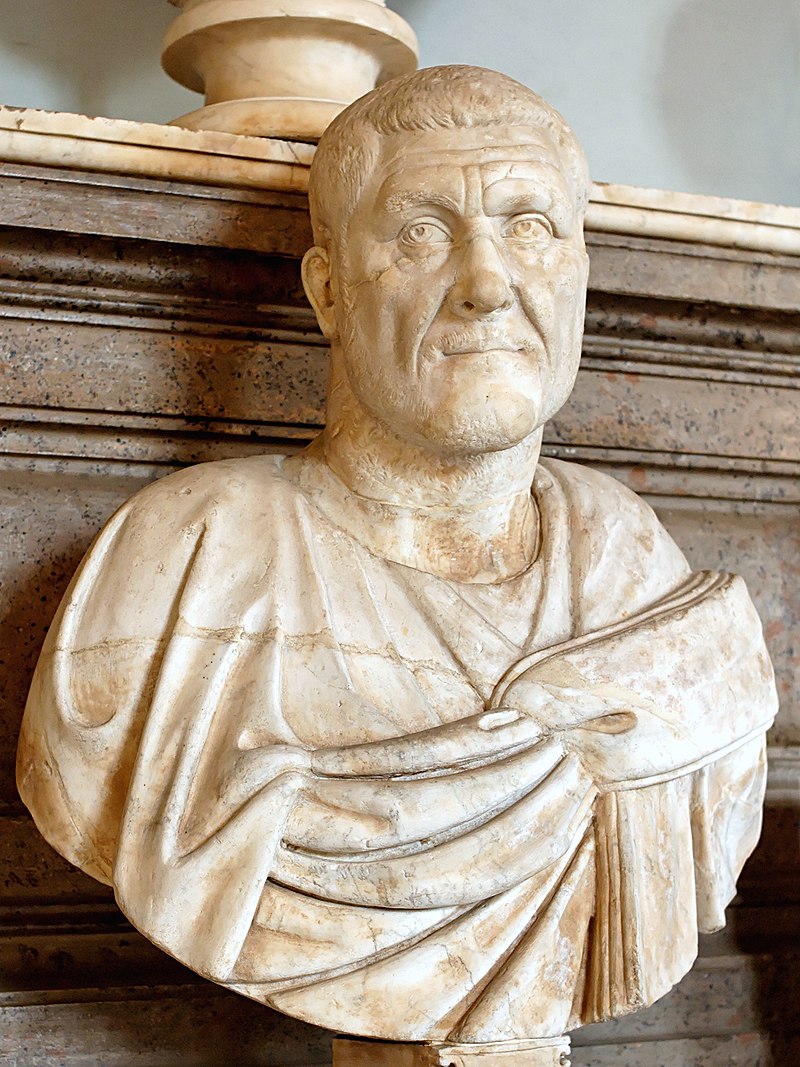
Maximinus I Thrax
Reign
Roman Empire (235 – 238)
Description
He was the first military emperor in the Roman Empire. After 3 years of reign, he was killed by his own army.
CAESAR GAIVS JVLIVS VERVS MAXIMINVS AVGVSTVS
Minting information
The coinage of Emperor Maximinus I Thrax distinguishes itself from the coinage of previous Roman emperors in many ways. First, the emperor's own image and name dominates the coins, instead of the coats of arms of the senate and cities. This change was due to the emperor's increasing authority and popularity. Maximinus' coins are much larger and heavier than the previous coins. This change served to emphasize the emperor's military strength and power symbol. Maximinus' coins contain many new motifs and labels. These include the deification of the emperor, his victory over the Germans, and the praise of military and civic virtues. Maximinus' coinage had a significant impact on Roman finances and the economy of the empire. Larger and heavier coins were expensive to produce and contributed to currency deterioration. The deification of the emperor further increased resistance to the central authority. Some examples of Maximinus' coinage: Aureus: The most valuable Roman coin minted in gold. On the aureus of Maximinus, you can see the face and name of the emperor Denarius: The basic unit of the Roman monetary system, which was minted from silver. Maximinus' denarius is dominated by the face and name of the emperor. Sestertius: The smaller unit of the Roman monetary system, minted in bronze. Maximinus' sestertius shows the portrait and name of the emperor. Maximinus' coinage is an important source for learning about the emperor's reign. Coins reflect the emperor's power aspirations, military strength and religious views.
