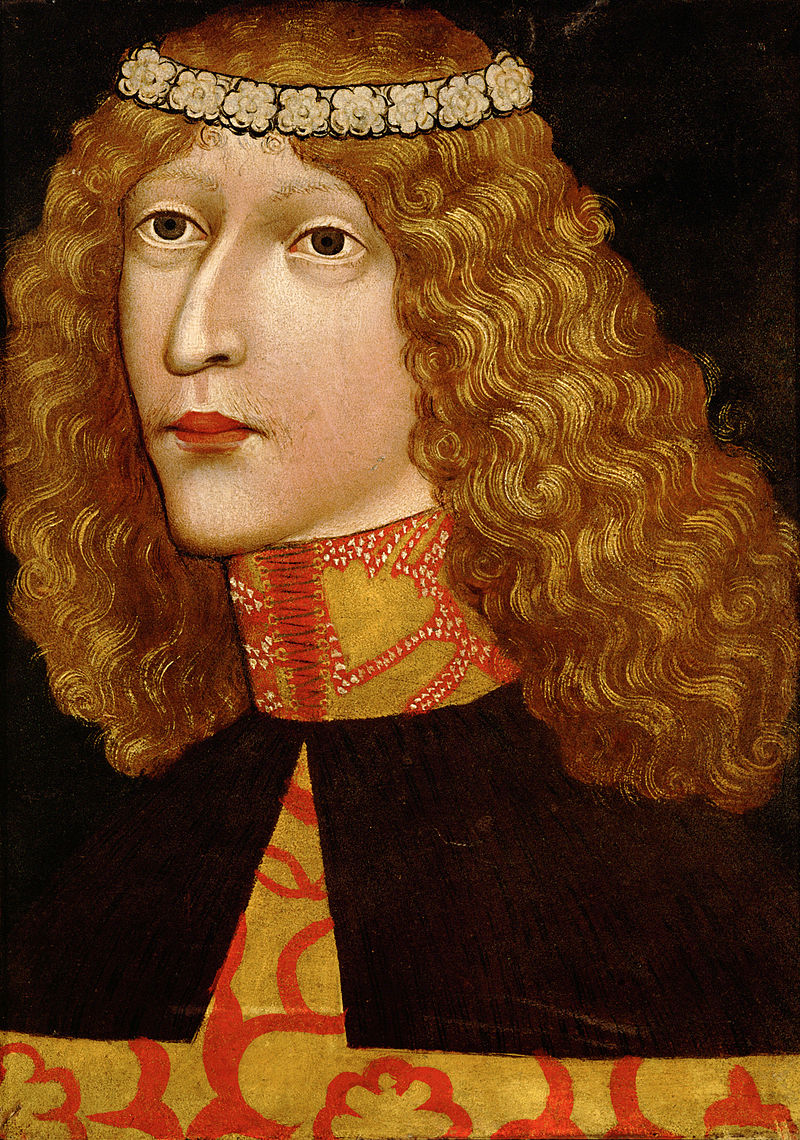
Ladislaus V
Description
Ladislaus V was born in 1440 as the fourth child of King Albert of Habsburg and Queen Elisabeth of Luxembourg. In Hungary, he was already crowned king when he was a baby, but he could only start his reign nominally in 1444.
During his minor years, János Hunyadi ruled in his stead. In 1456, János Hunyadi died shortly after the battle of Nándorfehérvár. Cillei Ulrik became the governor of Hungary.
In 1457, the king had a meeting with his betrothed, the daughter of King Charles VII, Madeleine but he died unexpectedly after a three-day illness. In Hungary, Mátyás Hunyadi I, in Austria Frederick, and in the Czech Republic George I succeeded him on the throne.
Minting information
V. László (1440-1457) carried out some important minting activities during his reign. V. At the beginning of László's reign, the copper coins were mainly made based on the coinage patterns from the time of the Anjou kings in the 14th century. These coins were typically of small denominations and the image of the ruler and the crown were visible on the obverse of the coin. The backs mostly featured depictions of various Christian saints.V. During the reign of László, special attention was paid to the minting of silver coins. Silver coins were more valuable and were often used for larger transactions. Bullion silver coins were often gilded to distinguish them from copper coins. In the coinage of our King László V, a new practice is coming to the fore, in addition to the simple golds of the past, multiple golds are also being minted, and we also have the stamp of a silver medal type in gold. Later, quarter gold forints were minted with such stamps, which, although very rare, can be considered normal circulation coins due to the exact weight ratio. In the development of today's Hungarian coat of arms, the coinage of László V also marks a new stage, as the Hungarian stripes with the patriarchal cross are often found on the previous coin types. in a two-field (parted) shield, and while the double cross is placed on a triple decoration only on the medal of János Hunyadi, on the medal of László V. this decoration turns into a naturalistic triple six. Counterfeiting was already a practice back then. From the time of László V., his gold forints with an original hammer, but made on a copper plate, are well known.