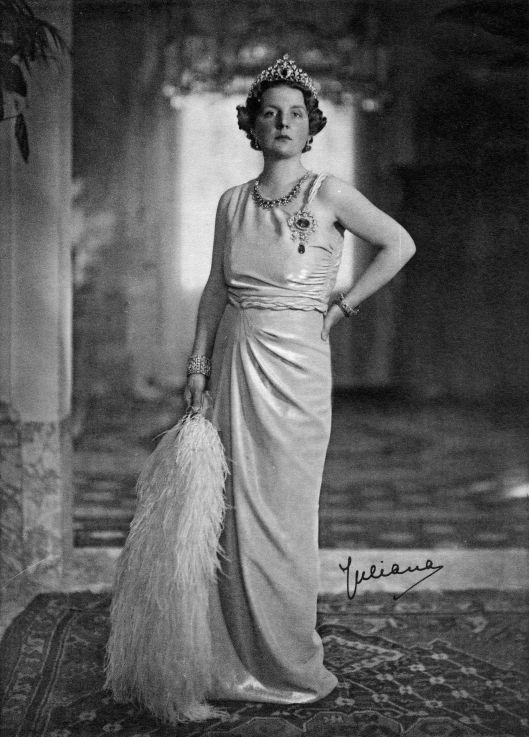
Juliana I
Description
During her personality and reign, Queen Juliana paid special attention to social issues and was known for her direct contact with the people. During his reign, the economy of the Netherlands grew significantly, and the construction of the welfare state also began. On April 30, 1980, after 32 years, Queen Julianna abdicated and was succeeded by her daughter, Queen Beatrix. Queen Julianna's life and reign were marked by many events and personal challenges, such as the Greet Hofmans affair, a it was an internal court conflict and had a major impact on the royal family and Queen Julianna. Queen Julianna died in 2004, and her life and reign are still remembered with respect and esteem in the Netherlands.I. Queen Julianna's family life was rich and eventful. Her husband, Bernát, was Duke of Lippe-Biesterfeld, with whom they had four daughters. Beatrix (1938–): She succeeded Julianna as Queen Beatrix I of the Netherlands, reigning from 1980 to 2013. Her husband was Miklós Amsbergi, Duke of the Netherlands. Irén (1939–): Princess who married (IV.) Károly Hugó Duke of Bourbon–Parma, the head of the ducal family of Parma. They had four children, but later divorced. Margit (1943–): Princess, husband Pieter van Vollenhoven. They have four children. Mária Kristina (1947-2019): Princess, her husband was Jorge Guillermo, with whom they had three children, but they also later divorced. Queen Julianna's family was close-knit, and the queen was known for placing great emphasis on family values and to raise your children. In addition to the royal duties, he always considered family important.
Minting information
Queen Julianna I of the Netherlands ascended the throne in 1948 and reigned until 1980. During this period, significant changes took place in Dutch coinage. After the Second World War, the Dutch government introduced a new coinage system in which banknotes and coins were given a uniform design. Banknotes were minted by De Nederlandsche Bank and coins by the Koninklijke Nederlandse Munt (Koninklijke Munt van Utrecht). Queen Julianna's portrait appeared on all Dutch banknotes and coins. The reverse side of the banknotes featured various Dutch historical and cultural themes. The face of the queen was on the obverse of the coins, and the Dutch coat of arms was visible on the reverse. After the introduction of the euro, the Dutch guilder was gradually withdrawn from circulation. Queen Julianna was the last Dutch monarch to have her portrait on gulden coins.
Suriname Juliana (1948-1975) 1 Cent Coin
Available: 1 pcs (1 seller)
3 500 Ft
Suriname Juliana (1948-1975) 10 Cents Coin
Available: 2 pcs (1 seller)
500 Ft – 700 Ft
Netherlands 400th Anniversary of the Union of Utrecht 2 1/2 Gulden Coin
Available: 1 pcs (1 seller)
900 Ft
Suriname Juliana (1948-1975) 5 Cents Coin
Available: 1 pcs (1 seller)
2 500 Ft
Netherlands Antilles Juliana (1948-1980) 5 Cents Coin
Available: 2 pcs (1 seller)
700 Ft – 1 000 Ft
Netherlands Antilles Juliana (1948-1980) 25 Cents Coin
Available: 4 pcs (1 seller)
600 Ft – 800 Ft
Netherlands Antilles Juliana (1948-1980) 10 Cents Coin
Available: 6 pcs (1 seller)
300 Ft – 600 Ft
Netherlands Antilles Juliana (1948-1980) 2 1/2 Cents Coin
Available: 3 pcs (1 seller)
500 Ft – 1 600 Ft
Netherlands Antilles Juliana (1948-1980) 1 Cent Coin
Available: 4 pcs (1 seller)
600 Ft – 2 100 Ft

Netherlands Juliana I. (1948-1980) 2 1/2 Gulden Coin
Available: 1 pcs (1 seller)
400 Ft

Netherlands Juliana I. (1948-1980) 5 Cent Coin
Available: 8 pcs (1 seller)
99 Ft – 500 Ft

Netherlands Juliana I. (1948-1980) 10 Cent Coin
Available: 3 pcs (1 seller)
99 Ft – 200 Ft