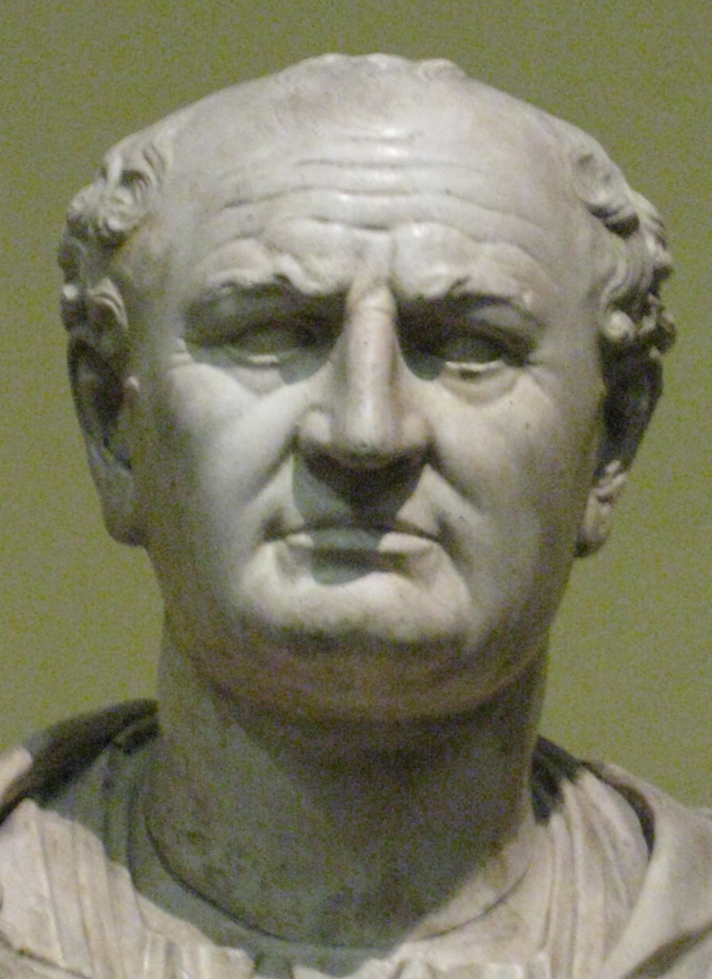
Vespasianus
Reign
Roman Empire (69 – 79)
Description
First emperor of the Flavians. He became emperor during the Roman-Jewish War.
TITVS FLAVIVS CAESAR VESPASIANVS AVGVSTVS
Minting information
The coinage of Emperor Vespasian was one of the highlights of Roman coinage. The emperor, who came to power in 69, took great care to arrange the financial affairs, and as a result, the coinage became reliable and stable again. Vespasian's coins were mainly made of gold, silver and bronze. Gold aureus had been out of circulation since the time of Augustus, but Vespasian reintroduced them and minted them in large quantities. Silver denarii were also minted regularly and these coins were one of the most popular currencies of the empire. Bronze coins, including sestertius, dupondius and asos, were also produced in large quantities. Vespasian's coins advertise both the person of the emperor and the power and wealth of the Roman Empire. Portraits of the emperor are usually serious and dignified and often decorated with religious symbols. The reverse side of the coins often depicts Roman gods or heroes, or the victories of the empire. Vespasian's coinage also brought many important innovations. He was the first emperor to regularly use mintmarks on coins to indicate where they were minted. In addition, he introduced the name "Flavius" on coins, which represents the name of the Flavian dynasty. Vespasian's coinage had a significant impact on the further development of Roman coinage. The innovations introduced by the emperor and the high quality of the money contributed to Roman money remaining one of the most valuable and reliable means of payment in the empire. Some specific examples of Vespasian's coinage: Gold aureus were the most valuable coins of the Roman coinage. Vespasian's aureus usually shows a portrait of the emperor, and the reverse often shows scenes depicting the victories of the Roman army. Silver denarii were one of the most popular currencies of the Roman mint. Vespasian's denarii usually depict a portrait of the emperor, and the reverse often depicts Roman gods or heroes. Bronze coins, including sestertius, dupondius, and asos, were the everyday currency of the Roman Empire. Vespasian's bronze coins often depict victories or religious symbols of the Roman Empire.


