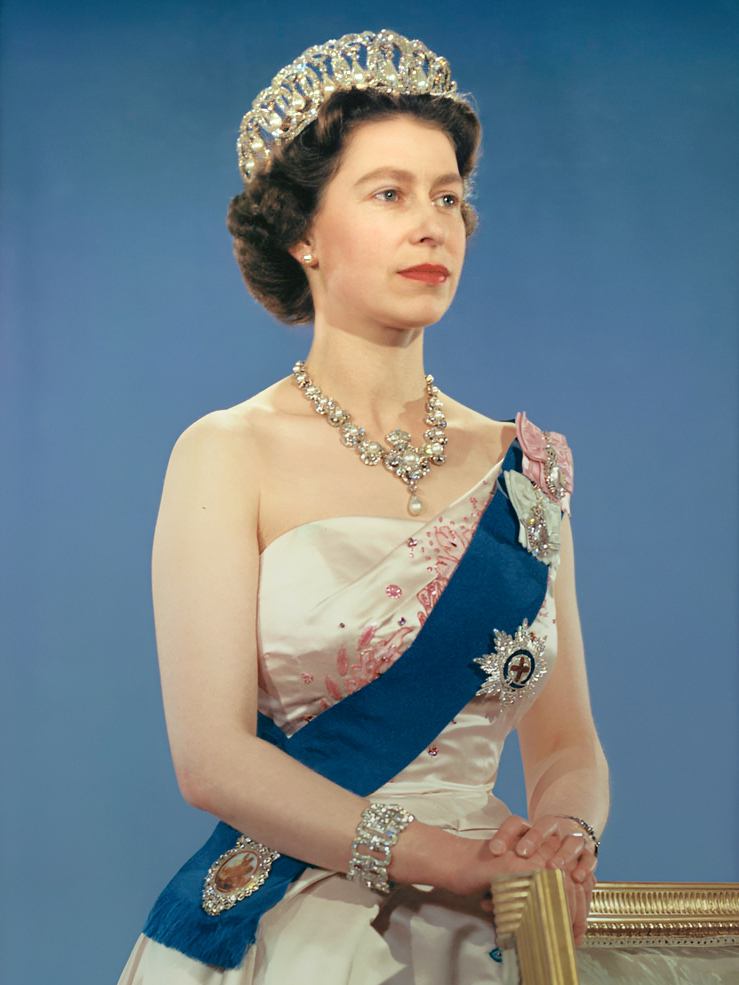
Elizabeth II
Reign
Australia (1952 – 2022)
Belize (1952 – 2022)
Bermuda (1952 – 1961)
British Virgin Islands (1952 – 1963)
Brtitsh East Africa (1952 – 1963)
Canada (1952 – 2022)
Cayman Islands (1952 – 2022)
Cook Islands (1952 – 1959)
Cyprus (1952 – 1968)
Eastern Caribbean States (1952 – 2022)
Falkland Islands (1952 – 2022)
Fiji (1952 – 1976)
Gibraltar (1952 – 2022)
Guernsey (1952 – 1976)
Hong Kong (1952 – 2022)
Isle of Man (1952 – 2022)
Jamaica (1952 – 2022)
Jersey (1952 – 2022)
Malaysia (1952 – 2022)
Mauritius (1952 – 1960)
New Zealand (1952 – 2022)
Nigeria (1952 – 2022)
Niue (1952 – 2022)
Saint Helena (1952 – 2022)
Seychelles (1952 – 2022)
Sierra Leone (1952 – 2022)
Solomon Islands (1952 – 2022)
South Africa (1952 – 2022)
Sri Lanka (1952 – 1972)
The Bahamas (1952 – 2022)
Trinidad and Tobago (1952 – 2022)
Turks and Caicos Islands (1952 – 1997)
Tuvalu (1952 – 2022)
United Kingdom (1952 – 2022)
Ghana (1957 – 1960)
Zimbabwe (1964 – 1970)
Barbados (1966 – 2022)
Papua New Guinea (1975 – 2022)
Description
Elizabeth II. was born on April 21, 1926 in London. When her father, VI. British King George died in February 1952, Elizabeth ascended the throne. Her coronation took place on 2. June 1953 in Westminster Abbey. She married Phillip Mountbatten in 1947. Their marriage lasted 73 years. She had 4 children with Phillip, Duke of Edinburgh. Her Majesty had different titles in different countries. In the United Kingdom she was named not only as Queen, but also as Head of the Commonwealth and Defender of the Faith. The British Queen ruled over 32 independent states for a total of 70 years. She was the longest reigning monarch in the history of the United Kingdom. She died on September 8, 2022.
Minting information
II. Elizabeth ascended the throne in 1952 and has been the longest-reigning monarch of the United Kingdom and the British Commonwealth ever since. During her reign, the British Mint made many changes to the Queen's coins to reflect the changes that occurred during her reign. The first coins of Queen Elizabeth were issued in 1952. These coins followed traditional British coins and were made of gold, silver and copper. The obverse of the coins features the Queen's portrait, and the reverse the British coat of arms. In 1971, the British Mint introduced decimalization, and the value of the coins changed tenfold. The new coins are made with decimal values and feature the Queen's portrait on the obverse and the British coat of arms and the date of decimalization on the reverse. In 1997 the British Mint issued new coins featuring the Queen's new portrait and have been used by all British coins ever since. on coin group.II. A number of special coins were also produced during Elizabeth's reign to celebrate the Queen's various milestones. These include Coronation coins, Silver and Golden Jubilee coins, and coins celebrating the Queen's 90th birthday.II. Elizabeth's coins are an important part of British history and culture. The coins reflect the changes that occurred during the Queen's reign and remind us of the history of the United Kingdom and the British Commonwealth. After decimalization, the British Mint introduced new technologies for the production of coins. II. Elizabeth's coins are collected and sold all over the world.

United Kingdom 1 Pounds Military vouchers
Available: 1 pcs (1 seller)
2 900 Ft

Jersey Elizabeth II (1952-2022) 50 New Pence
Available: 1 pcs (1 seller)
1 900 Ft

Jamaica Endangered Wildlife .925 Silver 25 Dollars
Available: 1 pcs (1 seller)
39 500 Ft

United Kingdom Platinum Jubilee 50 Pence
Available: 1 pcs (1 seller)
1 800 Ft

Bermuda Elizabeth II (1952-1961) 50 Cents
Available: 2 pcs (1 seller)
2 900 Ft – 6 500 Ft

Saint Helena 80th birthday of Queen Elizabeth the Queen Mother 25 Pence
Available: 1 pcs (1 seller)
4 900 Ft

Tuvalu Elizabeth II (1952-2022) 1 Dollars
Available: 1 pcs (1 seller)
22 000 Ft

Isle of Man Elizabeth II (1952-2022) 2 New Penny
Available: 1 pcs (1 seller)
2 900 Ft

Mauritius Elizabeth II (1952-1960) 1 Cents
Available: 3 pcs (1 seller)
1 900 Ft – 3 800 Ft

Hong Kong Elizabeth II (1952-2022) 50 Cents
Available: 2 pcs (1 seller)
1 500 Ft – 1 600 Ft

Fiji Elizabeth II (1952-1976) 1 Shilling
Available: 4 pcs (1 seller)
3 500 Ft – 7 900 Ft

Fiji Elizabeth II (1952-1976) 6 Penny
Available: 2 pcs (1 seller)
6 900 Ft – 8 500 Ft