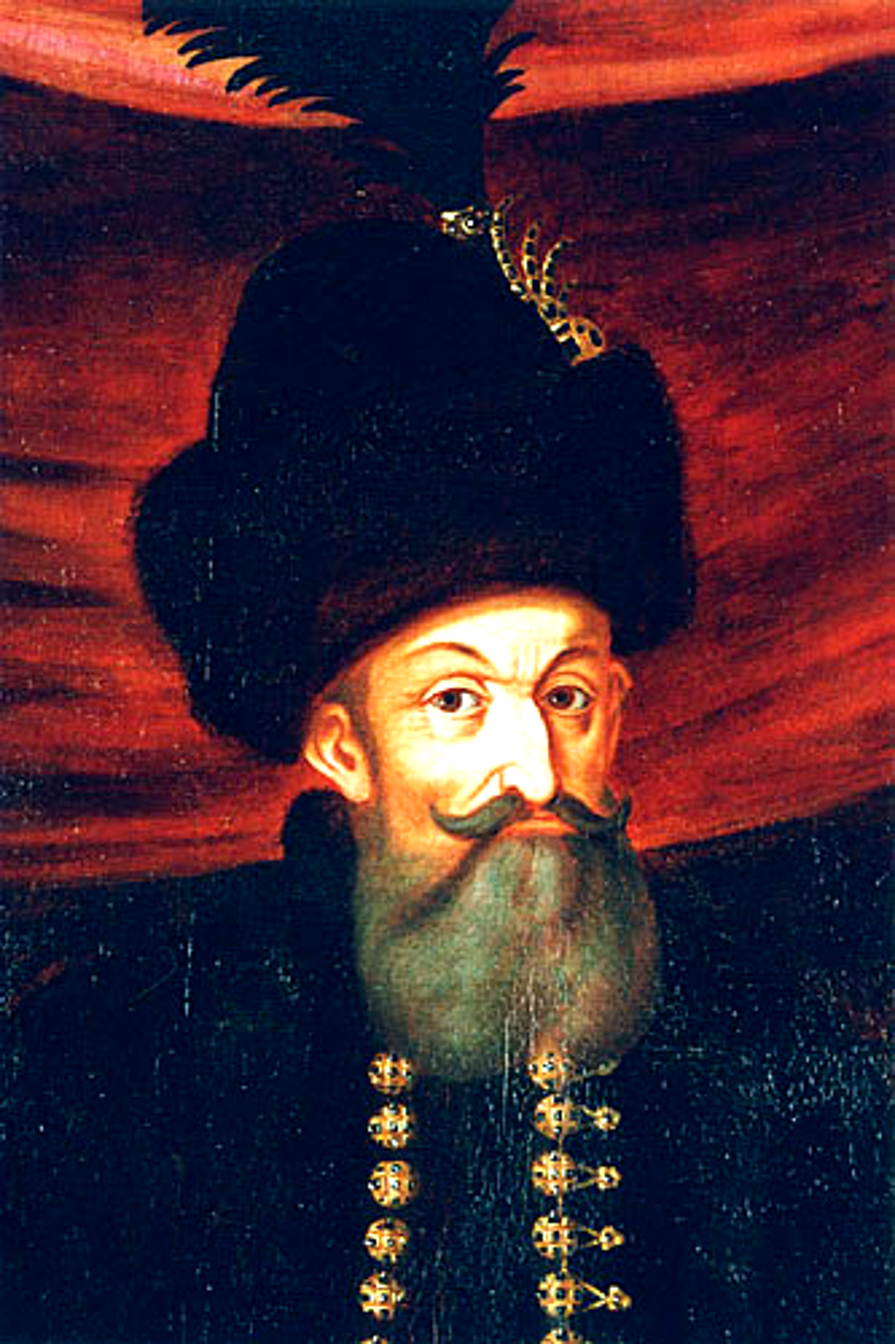
George I Rákóczi
Reign
Principality of Transylvania (1630 – 1648)
Description
George II Rákóczi was born in June 1593 in Szerencs, a small town in Northern Hungary. His father, Sigismund Rákóczi, was a Transylvanian prince. He married for the second time, when he married Anna Gerendi. George was born as their second child. His stepsister, Elizabeth was born from Sigismund's first marriage. His two younger brothers by blood were Paul and Sigismund. At the age of 12, George became a tutor in the Kassa court of Prince Stephen Bocskai. There he met Gabriel Bethlen, whose later campaigns he joined. After his grandfather died in 1606, he moved back in with his family. In 1607 he was elected prince of Transylvania. At the beginning of his reign, he mostly stayed in Hungary. Due to his young age, he avoided political situations. From 1615 he became the chief lord of Borsod county. A year later, he married Zsuzsanna Lorántffy, with whom they later had 4 children. Together with his wife, he contributed to the development of the church and education. He was appointed prince at the 1630 Sighisoara parliament. We consider this year to be the beginning of his reign. He recovered the expropriated treasury properties, thereby expanding the Rákóczi family's wealth. During the Thirty Years War, it made an alliance with the Swedes and the French, and in 1644 it was overrun by Ferdinand's III armies. He joined the Swedish army, with whom they besieged Vienna. However, the attack was prevented by the sultan, so Rákóczi chose peace instead. In 1645, the Peace of Linz was concluded with Ferdinand Emperor III, he also took possession of 7 counties. He died in Alba lulia in October 1648.
Minting information
The coinage of the Transylvanian prince György Rákóczi I between 1630 and 1648 was one of the most significant eras of Transylvanian coinage. The prince significantly modernized the operation of the mint and introduced new coins. The prince founded the new mint in Cluj-Napoca in 1630. The mint was equipped with the most modern technologies of the time, and the prince paid special attention to the quality of the coins. In 1630, he introduced the gold forint, which became the basic unit of the Transylvanian monetary system. The gold forint was worth 300 denars. In 1631, the silver thaler was put into circulation, which became the main currency used in trade. The silver thaler was worth 30 denars. The denar was the lowest value coin in the Transylvanian monetary system. The denarius was worth 10 kreuzers. György Rákóczi's coinage contributed significantly to the modernization and stability of the Transylvanian monetary system. The prince's coins won recognition among contemporaries for their quality and beauty.
No coins linked to this ruler yet.