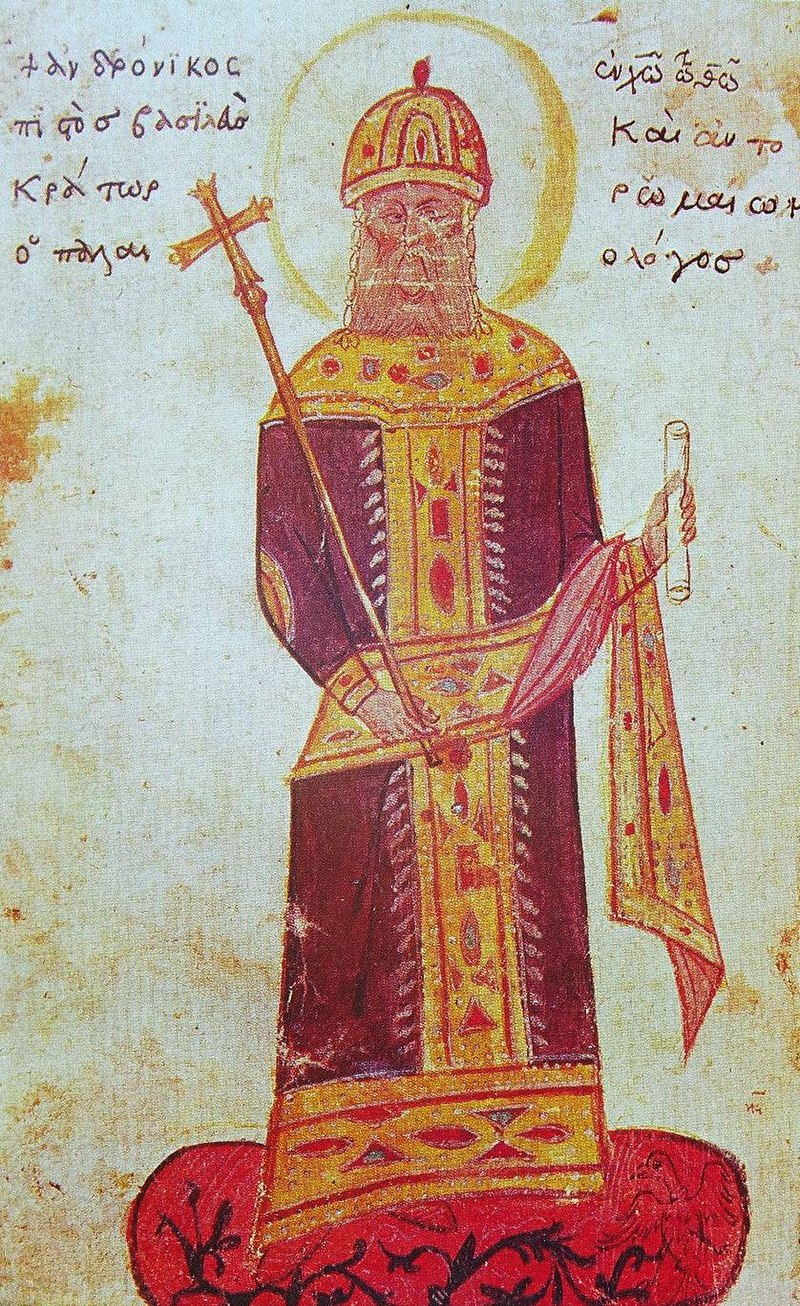
Andronikos II Palaiologos
Reign
Byzantine (1282 – 1328)
Description
II. (Palaiologos) Andronikos, Emperor of Byzantium (1282-1328). He was born in 1259 in Nikaia, VIII. As the child of the Byzantine emperor Michael and Theodora Palaiologina. He gained military experience at a young age and took part in his father's campaigns. In 1273 he married the Hungarian princess Anna Árpád-házi. In 1282, after his father's death, he ascended the Byzantine throne. His long reign (46 years) It fell into the period of the decline of the empire. At the beginning, he successfully consolidated the empire, strengthened the army and stabilized the economy. In his foreign policy, he tried to ally with the Western powers against the Turkish threat. In 1284, he married Princess Irene of Montferrati, after Anna's death. During his reign, he faced many domestic political challenges, including: revolts of the aristocracy, uprising of Catalan mercenaries, civil war with his grandson, III. Andronikos. He was forced to make concessions to the aristocracy, which led to the weakening of the imperial power. He supported the arts and sciences, and Byzantine culture flourished during his reign. He tried to make a compromise between the Eastern and Western churches, but this did not succeed. it was characterized by civil wars and military defeats. In 1320, his grandson, III. Andronikos rebelled against him and drove him from the throne in 1328, he died in 1332. His reign fell during the period of decline of the Byzantine Empire, but he managed to preserve the integrity of the empire. His reign was characterized by significant cultural and scientific development. II. Andronikos was an excellent soldier and diplomat who spoke many languages, including Latin, Greek and Persian. He amassed a large library and supported scholars and artists.
Minting information
II. Coinage played an important role in the Byzantine Empire during the reign of Emperor Andronikos (1282-1328). During his reign, the empire had financial difficulties, so he introduced many changes in the monetary system. In the early stages of his reign II. Andronikos introduced a new gold coin called "hyperperon", whose purpose was to stabilize the empire's financial situation. However, over time, the empire's financial problems worsened. II. Andronikos implemented coinage reforms during his later reign. They tried to restore the financial stability of the Byzantine Empire by minting new coins and introducing stricter control over the minting process.II. During the reign of Andronikos, the coinage of the Byzantine Empire went through a complex period, where currency deterioration and reforms alternated with each other in order to improve the empire's financial situation.
