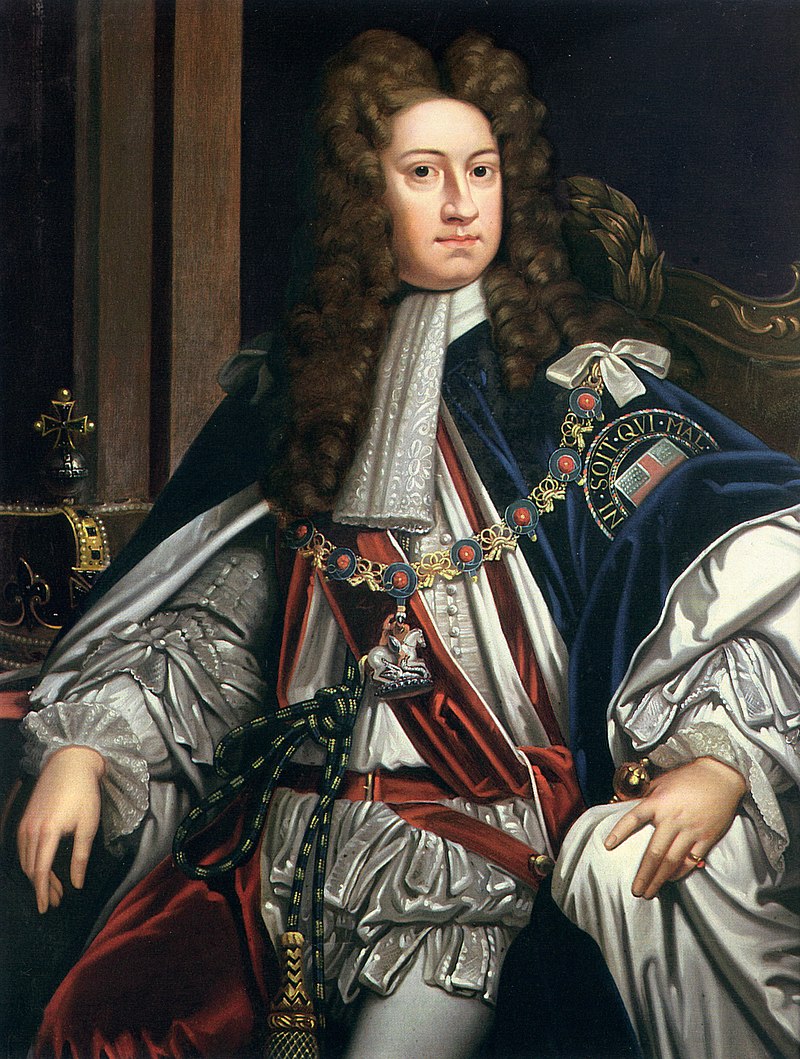
George I
Reign
Hannover (1698 – 1727)
United Kingdom (1714 – 1727)
Description
George I, originally Georg Ludwig von Braunschweig-Lüneburg, was born in Hanover on May 28, 1660. He was the Elector of Hanover (1698–1727) and then King of Great Britain and Ireland from 1714 until his death. Ernő Ágost György was the eldest son of the Elector of Hanover. After his father's death in 1698, he inherited the duchy and his imperial titles from him, including the Electorate. At the age of fifty-four, after the death of Queen Anne of England, based on the succession law passed earlier (which excluded the Catholic son of the exiled King James II, James Stuart), Great- He was crowned King of Britain and Ireland. He was the great-grandson of King George I of England and Anna's closest Protestant relative. He was the first member of the Hanoverian dynasty. In 1682, György married his cousin Dorottya Zsófia Cellei; with the marriage of convenience, it ensured that the estates outside the Sál laws remained within the family. In 1683, György and his younger brother, Ágos Frigyes, took part in the Battle of Kahlenberg, where they stopped the Turkish invasion of Vienna. In the same year, György's first son, Ágost György, was born. Zsófia Dorottya had a daughter in 1687, who was named after her, but she did not get pregnant after that. The couple became estranged from each other, György preferred to spend his time with his lover, Melusine von der Schulenburg, who bore him two daughters. Zsófia cheated on her husband with a Swedish count, Guards Colonel Philipp Christoph von Königsmarck (brother of Countess Aurora von Königsmarck), and despite the persuasion of her mother-in-law and brothers-in-law, who were afraid of scandal, she refused to break up with him. György and Zsófia's marriage was dissolved in 1694, not on the grounds of either party's infidelity , but because Zsófia allegedly left her husband. With the approval of his father-in-law, György locked his ex-wife in the Ahlden castle, where Zsófia remained for the remaining thirty years of her life. She was forbidden to see her children, to remarry, and was only allowed to walk alone in the castle gardens (although she was allowed to drive out under supervision and was given a comfortable income). During her reign, James Stuart tried twice to dethrone her, but both attempts quickly failed. During George's reign, the decline of the power of the English kings continued and the development of the modern form of government led by prime ministers. In the 1720s, the country was practically ruled by Robert Walpole, who is often referred to as the first prime minister. In 1727, György visited Hanover again. On June 9, he suffered a stroke on the road between Delden and Nordhorn and was taken to the bishop's palace in Osnabrück (his younger brother, Ágost Ernő was the bishop). He died two days later, on the morning of June 11. He was buried in the chapel of Leine Castle. During the Second World War, the castle was bombed and after the war, the remains of the king were transferred to Herrenhausen in Hanover. His son, Ágos György, succeeded him on the British and Hanoverian thrones. Named George.
Minting information
During the reign of King George I of England (1714-1727), the most important change in English coinage was the end of the "last Stuart" coinage and the transition to the Hanoverian dynasty.I. During George's reign, the English mint minted a constant pound, the stability and reliability of the coin increased, which contributed to the development and strength of the English economy in the future.
