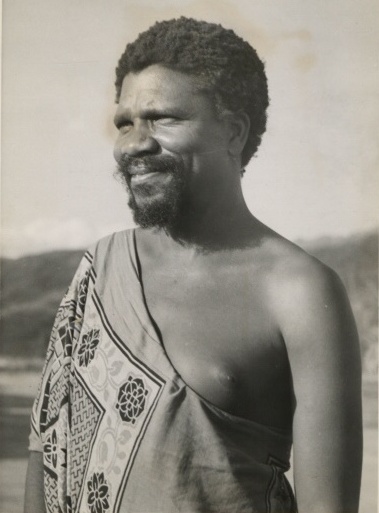
Sobhuza II
Description
II. Sobhuza (Nkhotfotjeni) was the ruler of Swaziland (now Eswatini) who held this position from 1921 to 1982. He is the longest reigning monarch in the world who reigned for 82 years and 254 days. Sobhuza was born on July 22, 1899 and died on August 21, 1982. After the death of his father, I Ngwane V, Sobhuza was designated as the heir to the throne when he was still an infant. His mother, Lomawa Ndwandwe, and his grandmother, Labotsibeni Mdluli, ruled as regents during Sobhuza's childhood. He officially ascended the throne in 1921, when Swaziland was a British protectorate. In 1968, the country became independent from British control, and King Sobhuza became the officially recognized ruler. During Sobhuza's reign, he introduced many reforms and played a significant role in achieving the country's independence. In the 1970s, when political instability arose, Sobhuza dissolved parliament and abolished political parties, then established a new parliament whose role was only advisory. Sobhuza II took many consorts, 70 wives in total. With this measure, he maintained close relations with the country's leading families. After his death, his son III. Mswati followed him on the throne.
Minting information
II. During the reign of King Sobhuza, Swaziland introduced its own currency, the lilangeni, in 1968. The lilangeni consisted of 100 cents and was minted in both coins and banknotes. The coins were minted in denominations of 1, 2, 5, 10, 20 and 50 cents, and the banknotes in denominations of 1, 2, 5, 10 and 20 lilangen. A portrait of King Sobhuza and the coat of arms of Swaziland were visible on the back. Also on the front of the banknotes is II. A portrait of King Sobhuza and scenes from Swaziland were visible on the back. In 1974, Swaziland introduced a decimal system with a rate of 1 lilangeni = 100 cents. The new coins were minted in denominations of 1, 2, 5, 10, 25 and 50 cents, and the banknotes in denominations of 1, 2, 5, 10 and 20 Lilangeni. A portrait of King Sobhuza and the coat of arms of Swaziland were visible on the back. Also on the front of the banknotes is II. A portrait of King Sobhuza, and scenes from Swaziland were visible on the back. II. After the death of King Sobhuza in 1982, III. King Mswati succeeded him on the throne. The portrait of the new king was put on coins and banknotes in 1983. Swaziland still uses lilangeni as its official currency.