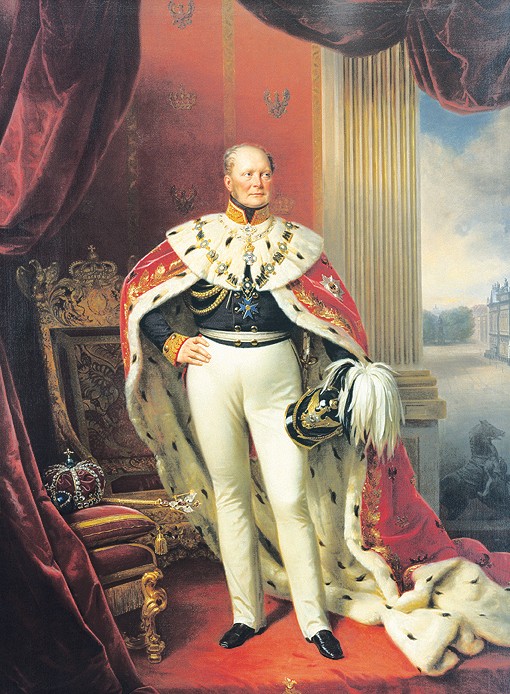
Frederick William IV
Reign
Prussia (1840 – 1861)
Description
ARC. Vilmos Frigyes, a member of the House of Hohenzollern, was king of Prussia from 1840. He was born in Berlin in 1795, his father III. King Frederick William of Prussia, and his mother was Princess Lujza of Mecklenburg-Strelitz. ARC. Vilmos Frigyes was the brother of German Emperor William I and Royal Prince Charles of Prussia. His interest in the arts and culture led many to believe that Prussia would take a more liberal path during his reign. During his reign, he abolished censorship and played an important role in the development of the constitution. While still heir to the throne, on November 29, 1823, he married Princess Elizabeth Ludovika of Bavaria (1801–1873) from the House of Wittelsbach, King Miksa I of Bavaria and Frederick Karolina. Daughter of Princess Vilma of Baden (1776–1841), aunt of Francis Joseph I and Empress Elisabeth. The marriage remained childless. In 1858, the ruler suffered a stroke, which disturbed his mind. He therefore handed the government over to his younger brother, Prince Vilmos, during his lifetime, who ruled as regent until Vilmos Frigyes died in 1861, and then inherited his brother's throne as Vilmos I. The ruler spent his last years in the Sanssouci castle, lonely and tormented by illness, devoting his time to his literary work.
Minting information
ARC. During the reign of King Frederick William of Prussia between 1840 and 1861, significant changes took place in the Prussian coinage. The king wanted to reform the minting system in the spirit of modernity, and to this end he introduced many innovations. One of the most important changes was that the king made the minting of Prussian coins a complete state monopoly. In the previous system, private enterprises could also participate in the coinage, which made it significantly more difficult to regulate the coinage policy. Another important measure of the king was to adapt the Prussian coinage to the German imperial monetary system. In the previous system, the Prussian money was not completely compatible with the money of the other German states, which caused many difficulties in trade. IV. During the reign of Wilhelm Frigyes, many new coins and banknotes were put into circulation. The most significant innovations included the introduction of 10, 20 and 50 copper pfennigs and 1 and 2 thalers silver coins. During the reign of the king, the Prussian minting system was significantly strengthened. The introduction of modern technologies and strict regulations have made Prussian money one of the most reliable and stable currencies in Europe.

